On this page
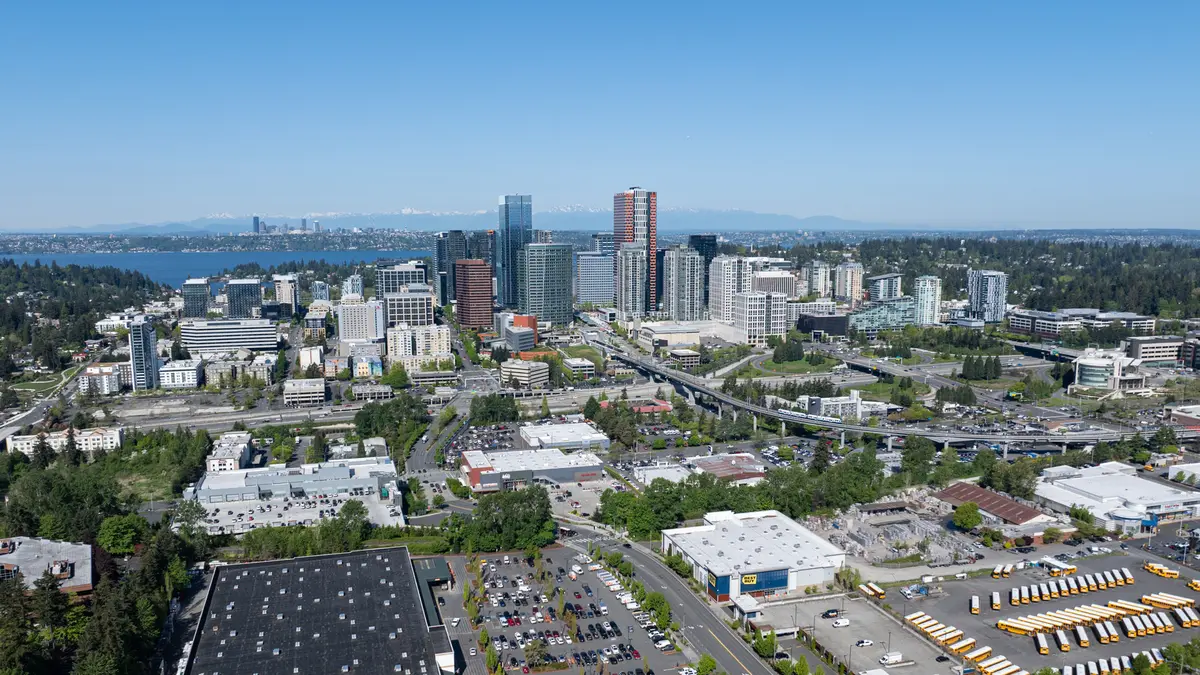

Bellevue Auto Insurance Built for Washington Families with Two Vehicles
This page helps Bellevue, WA drivers understand car insurance options and request a quote through WashingtonCarInsurance.com, operated by Drivers Insurance Agency, Inc. The focus is on Bellevue households that own two cars, split driving between commuting and errands, and need to coordinate coverage across a financed vehicle and a paid‑off one.
Everything here applies to Washington State, not Washington, DC. Coverage is subject to insurer underwriting, availability, and individual circumstances. Readers can request a personalized Washington quote online or by calling 844‑348‑1313. We do not have a Bellevue walk‑in office.
Bellevue Car Insurance for a Changing Two-Car Household
A two-car household may need to decide which coverage goes on each car, what the lender requires, how to report a changing commute and whether to accept PIP and UM/UIM. Review those questions together so the quote reflects your household’s actual insurance needs.
Here is what we focus on:
-
Two‑vehicle household coverage planning. We review how each car is used, who drives it, and whether a lender contract dictates collision and comprehensive requirements.
-
Washington‑specific rules. We explain Washington car insurance requirements including PIP offering, UM/UIM written rejection, and SR‑22 filing procedures so clients know what they are accepting or declining.
-
Honest education before quoting. We provide coverage explanations on our website before asking for vehicle details or driving history, so drivers understand what they are buying.
-
SR‑22 and non‑owner policy support. For Washington drivers who need an SR‑22 filing or who do not own a vehicle, we handle those requests where eligible.
-
Phone access for follow‑up. After an online quote request, customers can make an easy, low-pressure follow-up call to 844‑348‑1313 instead of guessing on a screen.
We do not bind coverage instantly online; coverage is not complete or effective until an insurer approves it and confirms effective dates.
How Our Bellevue Car Insurance Process Works
Start a quote request on our quote page or call 844-348-1313. An agent can discuss the details and available choices; final pricing and coverage depend on insurer review.
Step 1: Tell Us About Your Bellevue Household and Vehicles
We collect the basics first:
-
Names, ages, and license status of all drivers in the household
-
Bellevue address and garaging ZIP code
-
Vehicle details for each car: year, make, model, and whether the car is financed, leased, or paid off
-
How each car is used (daily commute, errands, business) and approximate annual mileage
-
Driving history, including any accidents, violations, or SR‑22 requirements
If you split your work week between an office and home, report your typical commute days and actual annual mileage. Check the figures on your existing policy when your routine changes. An insurer’s classifications and pricing rules vary, so ask how it handles your situation.
Step 2: We Match Coverage to Each Car’s Role and Value
A two-car household can consider different physical-damage coverage and deductibles for each vehicle, subject to insurer rules and lender requirements. Review liability and other coverage limits on the actual proposal rather than assuming every coverage is identical across vehicles.
Common setups we discuss with Bellevue households:
-
Financed SUV: lenders commonly require collision and comprehensive. Review the contract’s limits, maximum deductibles and loss-payee requirements before changing coverage.
-
Liability, PIP, and UM/UIM on a paid‑off sedan. When a second car has low market value and no loan, some households choose to skip collision and comprehensive after weighing the repair‑cost‑versus‑premium trade‑off.
-
Primary commuter: a lower deductible may reduce your share of a covered collision or comprehensive loss. It does not limit all possible repair bills; uncovered losses and damage beyond policy terms remain your responsibility.
-
Second car: compare a higher deductible if you can afford the added expense after a covered loss. Low mileage alone does not establish which deductible is affordable or which losses will occur.
These are starting points for conversation, not prescriptions. The right coverage choice depends on each car’s role, value, and household priorities, and we adjust based on what we learn about your household.
Step 3: You Review Options and Decide What Fits
We present available options from our insurers, explain the trade‑offs between premium, deductibles, and coverage limits, and answer questions. Nothing is bound until an insurer confirms acceptance and effective dates are agreed.
If your driving patterns changed after 2020, schedule time to walk through your two‑car setup. What made sense before a hybrid work arrangement may no longer match how the cars are actually used.
Washington Minimum Car Insurance Requirements for Bellevue Drivers
Bellevue drivers follow the same financial responsibility law as every other Washington driver. The rules summarized below are based on Washington resources reviewed November 4, 2026, and can change. See our minimum car insurance page for more detail.
Required Liability Limits: 25/50/10
For most personal vehicles subject to Washington’s insurance law, the general liability minimums are 25/50/10:
-
$25,000 bodily injury per person
-
$50,000 bodily injury per accident (Washington’s minimum liability coverage per accident)
-
$10,000 property damage per accident
These are state minimums, not a personalized recommendation. A serious accident can exceed them. Compare higher limits and consider the savings or income that could be exposed if you owe more than insurance pays.
DOL also lists approved alternatives, including a qualifying certificate of deposit or liability bond of at least $60,000 and self-insurance for qualifying owners of 26 or more vehicles. Specific vehicle exceptions apply. See DOL’s mandatory-insurance guidance.
Driving without proof of insurance in Washington can result in fines.
Personal Injury Protection (PIP) in Washington
PIP can cover specified medical, funeral, income-loss and loss-of-services expenses for covered people regardless of fault. Applicable Washington auto policies must offer it. You can reject it in writing; without a written rejection, the insurer adds PIP and charges for it.
PIP and liability serve different purposes. PIP can pay covered benefits regardless of fault, while Washington liability claims depend on who is responsible for the accident. Review OIC’s PIP explanation.
Compare PIP with your health plan’s benefits, deductibles and coordination rules. The minimum PIP medical benefit is $10,000 for covered expenses incurred within three years of the accident; other PIP benefits have separate conditions and limits. Ask how claims coordinate rather than assuming PIP automatically reimburses every health-plan expense.
Uninsured / Underinsured Motorist (UM/UIM) Coverage
UM/UIM can help with covered losses involving an uninsured, underinsured or qualifying unidentified driver. Under RCW 48.22.030, applicable policies must offer this protection; the named insured or spouse may reject all or part in writing.
Key details:
-
UM/UIM bodily injury limits are set to match your liability limits unless you choose different limits in writing.
-
UM/UIM property damage is a separate coverage with its own limit and deductible. For hit‑and‑run or phantom vehicle property damage, the maximum deductible allowed by statute is $300; for other underinsured property damage, the maximum deductible is $100.
-
Review the insurer’s written selection or rejection form carefully. Keep a copy showing which UM/UIM coverages and limits you chose.
Consider UM/UIM alongside your liability limits, PIP and other benefits. Its payment depends on covered damages, available liability coverage and the policy’s terms; it does not automatically pay every amount above the other driver’s limit.
Beyond the Minimum: Common Bellevue Coverage Choices
Broader coverage can reflect your budget, vehicle value and lender contract. The following choices help a two-car household compare what each policy would pay after a covered loss.
Full Coverage, Collision, and Comprehensive for Financed vs Paid‑Off Cars
Collision coverage pays for damage to your vehicle from a crash with another car or object. Comprehensive coverage pays for non‑collision damage: theft, vandalism, glass breakage, certain weather events, and animal impacts.
Washington’s general liability-insurance requirement does not mandate comprehensive or collision. A lender or lessor commonly requires both by contract, with specific deductible limits. A breach can result in lender-placed insurance or other contract consequences; lender-placed coverage may protect the lender’s interest without replacing the protection you need.
For a Bellevue household with two cars, the decision often splits along these lines:
-
Example: a financed SUV carries collision and comprehensive to meet the lender’s contract. “Full coverage” is an informal label, not a promise that every loss is insured; identify the actual coverages and exclusions.
-
An older second car with low market value and no loan can sometimes be covered with liability, PIP, and UM/UIM only, after the household weighs the risk of paying for repairs or replacement out of pocket.
Before buying another car, request a quote for its exact make, model and year or VIN, using comparable coverage. Vehicle repair costs and other rating factors can affect the result. See our buying and financing guide.
Choosing Deductibles for Each Vehicle
A deductible is the part of a covered loss you retain under the policy, commonly subtracted from a collision or comprehensive payment. Higher deductibles may reduce the premium but increase your share of a covered claim. Ask for quotations at available deductible levels and check lender restrictions.
Strategies we walk through with Bellevue households:
-
If emergency savings are limited, compare a lower deductible on the primary car against the added premium. Remember that a deductible applies to a covered claim, not ordinary maintenance or every repair.
-
If the household can afford a larger share of a covered loss, request a higher-deductible proposal for the second vehicle and compare the actual premium difference.
-
A household with both a financed car and a paid‑off car can set different deductibles on each, matching financial capacity to each vehicle’s role.
Our claims, repairs, and deductibles page explains how deductibles interact with the claims process.
Rental Car Reimbursement and Towing
Rental reimbursement coverage pays toward a rental car while your vehicle is being repaired after a covered loss. Policies set per‑day and per‑claim dollar limits; these vary by insurer and endorsement.
Roadside or towing coverage may include services such as towing, jump starts, tire changes or lockout assistance. Distance, service, dollar and frequency limits vary. Read the endorsement and check any existing auto-club benefits before buying overlapping coverage.
If only one household vehicle suits the daily commute or child transportation, plan for its temporary loss of use. Ask what activates rental reimbursement, how long benefits last and the daily and total limits. Compare the premium with your alternative transportation plan rather than assuming a rental will be fully paid.
How Bellevue Driving Patterns Affect Your Insurance Rates
We do not control insurer rating formulas, and car insurance costs vary based on driving history, age, vehicle, and neighborhood. What we can do is explain the factors Bellevue drivers should report accurately and update when circumstances change.
The City of Bellevue’s traffic conditions page is a useful local tool for planning routes and understanding current road conditions.
Commute Miles, Hybrid Work, and Pleasure Use
Tell the insurer whether each car is used for commuting, personal errands, business travel, delivery or paid passenger transportation. Its vehicle-use categories and coverage rules vary; a three-day commute does not automatically fall into a different class from a five-day commute.
For example, a hybrid-work routine could include:
-
Three days per week on I‑405, SR‑520, or I‑90 to reach a Seattle or Eastside office
-
Occasional trips for meetings or client visits on other days
-
Weekends reserved for family errands and activities
When the routine changes, update your agent. The insurer can explain any rating or coverage effect and correct the policy records. Accurate reporting matters; fewer commute days do not guarantee a discount or determine the outcome of a future claim.
Two‑Car Households: Splitting the Miles
Example: one Bellevue household uses an SUV for most commuting and a sedan for local errands. Identify who drives each car, whether household members share them, and where each car is kept. Give the insurer the actual arrangement rather than choosing a driver assignment solely to seek a lower price.
Example household mile splits (these are usage illustrations, not rate predictions):
-
SUV driven 12,000 to 15,000 miles per year for commuting and family travel
-
Compact sedan driven 3,000 to 5,000 miles per year for local errands
Reporting these numbers accurately matters. If the sedan’s mileage jumps because a teenager starts driving it to school daily, that changes the risk profile. Annual reviews of mileage and usage help ensure the policy still matches reality.
Non‑Owner Insurance for Bellevue Drivers Without a Car
Non‑owner car insurance provides liability coverage for someone who does not own a vehicle and does not have regular access to a household member’s car. It covers the driver, not a specific automobile. Full details are on our non‑owner car insurance page.
Who Non‑Owner Policies Are (and Aren’t) For
A non‑owner policy fits a specific profile:
-
The person does not own a vehicle
-
They do not have regular access to a car kept in their household
-
They occasionally rent or borrow vehicles not stored at their home
Non‑owner coverage does not pay for damage to the car you borrow or rent. It provides liability protection if you cause bodily injury or property damage to others while driving. Insurer eligibility guidelines apply; not everyone will qualify.
SR‑22 Car Insurance Help for Bellevue Drivers
An SR‑22 is a certificate filed by an approved insurer with the Washington Department of Licensing to prove you maintain the required auto insurance. It is proof of financial responsibility, not a separate “type” of insurance. Our SR‑22 insurance page covers statewide details.
How SR‑22 Filings Work in Washington
The Washington DOL decides who needs an SR‑22 and for how long. SR‑22 proof is typically required for three years from the date a driver becomes eligible to reinstate their license, not the date of the violation. An SR‑22 filing alone does not authorize someone to drive; DOL reinstatement steps (fees, testing, or other conditions) must also be completed.
Check your DOL notice or online account for the individual filing period and reinstatement requirements. Then ask an eligible insurer for a quote that includes the required filing; no fixed SR-22 policy price applies to every Bellevue driver.
SR‑22 Options: Owner, Non‑Owner, and Household Considerations
-
An owner policy may be appropriate when you own a vehicle, subject to the insurer’s ownership, registration and underwriting requirements. Ask whether an SR-22 filing can be attached to the proposed policy.
-
Non‑owner SR‑22 policies are for those required to show SR‑22 proof but who do not own a vehicle and do not have regular access to one.
An insurer’s cancellation notice to DOL can result in another suspension if required proof is no longer in place. Maintain continuous qualifying coverage for the required period and coordinate any switch before cancelling. Confirm the effect of a lapse with DOL; do not assume a universal automatic restart date.
Comparing Bellevue Car Insurance Options for Your Household
Compare rates using the same drivers, vehicles, coverages and policy term. An independent agency may help compare available insurers; ask which companies are included and whether additional quotes would be useful. The lowest premium is only meaningful when you understand what the proposal covers.
Your driving history, vehicle details, location, mileage and coverage choices can affect insurance rates. Ask the insurer to explain the factors used in your quote. A clean driving record may support eligibility for discounts, but it does not establish a price or guarantee savings.
Ask about any available multi-car, safe-driver, payment or low-mileage discounts and their conditions. If an insurer offers a discount involving an existing home insurance policy, compare the combined cost and coverage before switching. Availability and savings vary; this is a question to ask, not a promise that every insurer or this agency offers another product.
Checklist: Two‑Car Household Comparison
Use this checklist when reviewing any quote or renewal for a two‑car Bellevue household:
-
Liability limits chosen: are they higher than 25/50/10?
-
PIP accepted or rejected in writing for each policy
-
UM/UIM decisions documented; limits compared to your liability limits
-
Collision and comprehensive on each car: yes or no, and why
-
Deductibles on each car; confirm your savings can handle them
-
Financed vehicles meeting lender insurance requirements
-
Accurate annual mileage and commute patterns listed for each vehicle
-
Rental reimbursement and roadside/towing chosen or declined
-
SR‑22 requirement status confirmed with DOL, if relevant
Annual discount reviews can identify new savings opportunities, so revisit this checklist at every renewal. Have it ready when you talk with us or any agent so the checklist helps review your insurance needs more clearly.
Bring Your Household Details to the Quote Discussion
A useful quote discussion connects each vehicle’s mileage, drivers, financing and coverage choices. Bring your current declarations page and the household checklist so the agent can identify differences between your existing policy and a new proposal.
What we do differently:
-
Attention to how each car is used. We ask about commute versus errands versus occasional use for each vehicle, because those categories affect what coverage makes sense.
-
Financed vs paid‑off analysis. We review whether a lender contract requires collision and comprehensive, then adjust deductibles and coverages accordingly.
-
Washington‑specific rule explanations. We walk through PIP offering, UM/UIM written rejection, and SR‑22 filing procedures so you understand what you are signing.
-
Online quote requests plus phone support. Start on our website, then call 844‑348‑1313 to talk through the details with our team.
Ask the team to explain any unfamiliar term or missing coverage before you decide. Keep the written proposal and confirm the final effective date and time.
Compare Insurance Rates Without Mixing Up the Two Cars
Create a separate line for each vehicle when reviewing a quote. Record its primary driver, annual mileage, financing status, collision deductible, comprehensive deductible and rental coverage. Then record the policy-level limits and total premium. This makes it easier to see whether a lower price comes from a changed coverage choice.
For example, suppose you compare $500 and $1,000 collision deductibles. The higher option leaves you responsible for an additional $500 on a covered claim to that vehicle. Ask how much premium it saves over the same policy term and check the loan contract. If both cars suffer covered losses, ask how the deductibles would apply; do not assume paying one deductible resolves every claim.
The City of Bellevue’s traffic resource links to live street cameras, regional highway conditions and closure advisories. Use it for trip planning, and update your insurer if a lasting change in your routine changes vehicle mileage or use. Traffic information does not establish your insurance rates.
Annual Reviews: Keep the Coverage Matched to Household Life
Use the renewal as a reminder to check the existing policy. Has a driver moved away, started using the second car for school or begun delivery work? Has the loan ended, or does a vehicle now stay at another address? Tell the insurer about changes when they occur, then confirm them again at renewal.
Ask an agent to identify discounts you qualify for and the requirements for keeping them. Compare the complete premium, policy term and payment fees. If you compare multiple carriers, keep the coverage limits and deductibles consistent and ask about service and claims handling as well as cost. There is no universal best insurer or guaranteed savings for every Bellevue household.
Finally, plan transportation during a repair. A second car may help, but it may not fit both drivers’ work schedules or every passenger. Compare rental reimbursement limits with that real need and check whether towing or roadside benefits overlap with an existing membership.
Frequently Asked Questions: Bellevue Car Insurance
Answers below are general Washington information, not legal advice. Policy terms vary by insurer.
Do Bellevue drivers have different minimum insurance requirements than the rest of Washington?
No. Washington’s 25/50/10 liability minimum and other auto insurance rules apply statewide. Cities like Bellevue do not set their own separate auto insurance minimums.
Can I carry different coverage on my two cars in Bellevue?
Insurers may allow different comprehensive, collision and deductible choices for each vehicle. A lender may require broader physical-damage coverage on a financed car. Review the policy’s liability, PIP and UM/UIM selections too; “full coverage” and “liability-only” labels do not replace the actual coverage list.
What happens if I move from another Washington city to Bellevue?
Update your address, garaging ZIP code, and commute information with your insurer. Rating can change when ZIP codes or usage change. We cannot predict whether your rate will go up or down; that depends on the insurer’s underwriting for your new location and circumstances.
Is PIP mandatory on my Bellevue auto policy?
Washington insurers must offer PIP. Personal Injury Protection must be offered but is not mandatory; you can reject it in writing. Consider your health insurance deductible and whether you regularly carry passengers before declining.
How long do I usually need an SR‑22 in Washington?
Washington DOL commonly requires SR‑22 proof for about three years from when a driver becomes eligible to reinstate, but DOL sets the actual term. Check your DOL notice or online account for exact dates. Avoid any gaps in coverage during the SR‑22 period; a lapse can trigger a new suspension.
Does paying off my Bellevue car loan mean I should drop collision?
Paying off a loan may remove the lender’s requirement, but it does not remove the financial risk of vehicle damage. Compare the car’s value, premium, deductible and what you could afford to repair or replace yourself. Ask the insurer to update the lender record once the loan is paid and review coverage before cancelling it.
Will working from home automatically lower my car insurance rates?
No. Report the actual change in commute and annual mileage and ask for a revised quote. Insurers use different rating rules, and household drivers, vehicle details and coverage choices still matter. Keep the policy information accurate even if the price does not change.
Can I use non-owner insurance for my spouse’s second car?
A non-owner policy generally is not intended for regular access to a household car. Disclose the vehicle and all household drivers to the insurer and ask how you should be covered on the appropriate owner policy. Our non-owner guide explains the distinction.
How should I switch insurance companies without a gap?
Obtain confirmation of the new policy’s effective date and time before ending the old policy. Check lender records and any required SR-22 filing, and keep proof of coverage. Ask about any cancellation charge or refund under the old policy; a quote request alone does not start replacement insurance.
Get Started on Bellevue Car Insurance Today
Review your current coverage and mileage patterns. If your commute changed, your second car’s usage shifted, or you paid off a loan, your policy may no longer match your household’s actual needs.
Two ways to reach us, so you can make the contact choice that fits you best:
-
Online: Start a quote request at /quote/
-
Phone: Call 844‑348‑1313
There is no Bellevue office to visit; everything is handled online and by phone. Coverage becomes effective only after insurer approval and confirmation. No instant binding happens on our website.
If you are comparing options from multiple carriers, bring the household checklist above. It keeps the conversation focused on what matters and helps a safe driver or multi-driver household review options clearly for your two‑car Bellevue household.